
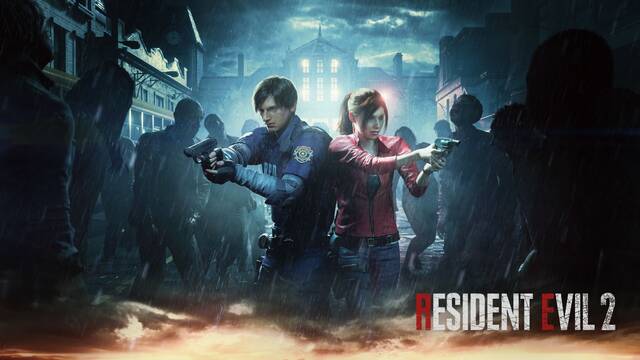
Resident Evil 2 Remake, officially titled Resident Evil 2, is one of the most important survival horror games of the modern era. Developed and published by Capcom, it reimagined the 1998 PlayStation classic for a new generation while preserving the atmosphere, tension, and identity that made the original one of the most beloved entries in the franchise. More than a simple visual update, the game became a full reconstruction of Raccoon City, its characters, its monsters, and its terrifying police station.
The original Resident Evil 2 was released in 1998 and quickly became one of the defining titles of survival horror. It introduced players to Leon S. Kennedy, a rookie police officer on his first day at work, and Claire Redfield, a young woman searching for her missing brother Chris. Both characters arrived in Raccoon City during a catastrophic viral outbreak that turned the population into zombies and unleashed biological weapons created by the Umbrella Corporation.
For years, fans considered Resident Evil 2 one of the best candidates for a remake. The challenge for Capcom was enormous: the original had fixed camera angles, pre-rendered backgrounds, tank controls, and a very specific 1990s atmosphere. A modern version had to respect that legacy while also feeling playable, cinematic, and frightening for contemporary audiences. The result was not a scene-by-scene copy, but a carefully redesigned survival horror experience.
Capcom approached the project as a full reimagining. The famous Raccoon Police Department returned as the central setting, but it was rebuilt with modern lighting, sound, environmental detail, and level design. The camera changed from fixed angles to an over-the-shoulder perspective, making combat more direct while also increasing the fear of every corridor, blind corner, and distant zombie growl.
The remake also modernized the way horror worked. Zombies were no longer simple obstacles; they were slow, resistant, unpredictable threats. Ammunition was limited, healing items were precious, and every decision mattered. A single enemy could become dangerous if the player wasted bullets, missed shots, or panicked. This balance between action and resource management helped the game recover the essence of classic survival horror.
Resident Evil 2 Remake launched on January 25, 2019, for PlayStation 4, Xbox One, and PC. Expectations were extremely high, especially after the franchise had regained prestige with Resident Evil 7: Biohazard. The remake arrived at the perfect moment: horror fans wanted a return to classic tension, while new players were ready for a polished, cinematic, modern entry point into the series.
The launch was a major success. Capcom announced that the game had shipped more than 3 million units worldwide during its first week. This showed not only the power of nostalgia, but also the strength of Capcom’s new remake strategy. Resident Evil 2 was not successful because it copied the past; it succeeded because it understood why the past mattered and translated it into a modern language.
The success of Resident Evil 2 Remake came from several elements working together. It respected veteran fans, welcomed newcomers, and proved that old survival horror ideas could still feel fresh when handled with confidence and technical ambition.
The history of the remake can be summarized through several key moments:
The legacy of Resident Evil 2 Remake is enormous. It became a model for how to remake a classic video game without losing its soul. Its success encouraged further modern reinterpretations, including Resident Evil 3 and Resident Evil 4, and helped confirm that survival horror could be both commercially powerful and creatively respected.
Today, Resident Evil 2 Remake is remembered as one of the best horror remakes ever made. It combined nostalgia, modern design, cinematic presentation, and genuine fear into a single experience. More than a tribute to a classic, it became a classic in its own right.
