
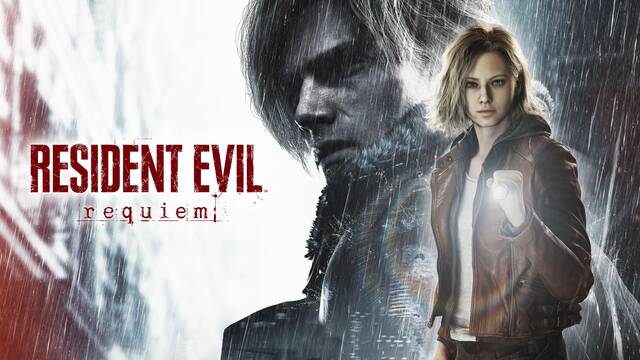
Resident Evil Requiem is one of the most important modern entries in Capcom’s legendary survival horror saga. As the ninth mainline title in the series, it arrived with enormous expectations, especially after the success of Resident Evil 7: Biohazard, Resident Evil Village, and Capcom’s acclaimed remakes of Resident Evil 2, Resident Evil 3, and Resident Evil 4. Rather than simply repeating the formula of those games, Requiem was designed as a bridge between classic horror, modern action, and the long shadow of the Raccoon City Incident.
The creation of Resident Evil Requiem came at a symbolic moment for the franchise. The Resident Evil series began in 1996, and Requiem was positioned as a major release during the saga’s 30th anniversary period. Capcom used the project to look both backward and forward: backward, because the story reconnects with the trauma of Raccoon City; forward, because it introduces new characters, modern systems, and a structure built around two very different playable experiences.
The game was developed using Capcom’s RE Engine, the technology behind many of the company’s most successful modern titles. This allowed Requiem to deliver photorealistic environments, detailed character models, oppressive lighting, and a strong sense of physical presence. The goal was not only to scare players with monsters, but to make locations feel damaged, infected, and haunted by history.
One of the most important creative decisions in Resident Evil Requiem is its focus on two protagonists: Grace Ashcroft and Leon S. Kennedy. Their stories are connected by the consequences of the Raccoon City Incident, but their gameplay styles and emotional roles are very different.
This dual-protagonist structure gives the game a strong contrast. Grace represents vulnerability, investigation, limited resources, and psychological horror. Leon represents experience, combat skill, weapons, parries, and more direct action. Together, they allow the game to combine two important sides of Resident Evil: fear and survival on one hand, action and spectacle on the other.
Resident Evil Requiem is especially notable for allowing players to experience both protagonists’ stories from either a first-person or third-person perspective. This is an important design choice because it lets players decide how they want to face fear. First-person gameplay makes the horror feel more intimate and claustrophobic, while third-person gameplay connects Requiem with the modern remakes and the classic identity of Leon’s action-focused adventures.
The contrast between Grace and Leon also affects combat and strategy. Grace must be careful with the supplies she finds and carries, making every encounter dangerous. Leon, meanwhile, has access to a wider arsenal, customizable equipment, melee attacks, parries, and stronger combat options. This gives the campaign variety without abandoning the survival horror foundation of the series.
Resident Evil Requiem launched on February 27, 2026, for PlayStation 5, Xbox Series X|S, Nintendo Switch 2, and PC. Its release was one of Capcom’s most important events of the year, not only because it was a new mainline Resident Evil title, but also because it arrived as part of the broader celebration of the franchise’s long history.
The game quickly became a major commercial success. Capcom announced that Requiem surpassed 6 million units worldwide and described it as the fastest Resident Evil title to reach that milestone. Later, Capcom’s Platinum Titles data listed the game at 6.90 million units, confirming its place among the company’s major sellers. The result showed that Resident Evil remained one of the strongest horror brands in gaming.
The importance of Resident Evil Requiem lies in how it combines several eras of the franchise. It uses the cinematic technology and visual realism of the modern games, the survival tension of the classic entries, the action identity associated with Leon, and the historical weight of Raccoon City. It is not only a sequel; it is a reflection on the consequences of the series’ most defining disaster.
The legacy of Resident Evil Requiem is still being shaped, but its impact is already clear. It became a major sales success, expanded the main chronology of the series, and offered a new way to experience Resident Evil through two protagonists and two camera perspectives. It also reinforced Capcom’s ability to keep the franchise relevant without depending only on nostalgia or remakes.
For long-time fans, Requiem works as a return to unresolved trauma: Raccoon City, Umbrella, bioterrorism, and the people who survived those nightmares. For new players, it offers a modern survival horror experience with polished presentation, strong characters, and flexible gameplay. In that sense, Resident Evil Requiem is both a continuation and a statement of intent: the series is still alive, still frightening, and still capable of reinventing itself.
