
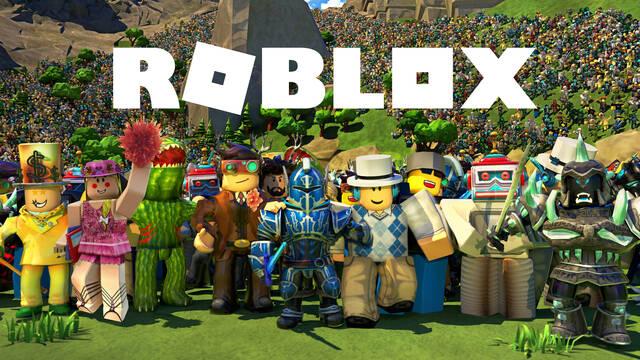
Roblox is difficult to define as just a video game. It is a game platform, a creation engine, a social space, a virtual economy, and a global entertainment ecosystem at the same time. Its greatest achievement is that it turned players into creators and transformed user-generated content into the center of the experience. Instead of offering one fixed adventure, Roblox offers millions of experiences made by its own community.
The origin of Roblox goes back to 2004, when David Baszucki and Erik Cassel founded the company. From the beginning, the idea was different from the traditional video game model. Roblox was not designed only as a finished product to be consumed, but as a platform where users could build, test, share, and play together.
This philosophy became possible thanks to Roblox Studio, the development tool that allows creators to design 3D worlds, program mechanics, publish games, and update their projects over time. The result was a living platform where the community could constantly create new genres, trends, challenges, and social spaces.
The success of Roblox comes from a combination of accessibility, creativity, social interaction, and a powerful creator economy. For many young players, Roblox was not only a place to play, but also a place to meet friends, express identity through avatars, discover new trends, and even learn the basics of game design.
Unlike many games that depend on sequels, Roblox grows through constant reinvention. If players become tired of one experience, another can appear quickly. This makes the platform flexible, unpredictable, and extremely attractive to creators and audiences alike.
The history of Roblox can be understood as the gradual transformation of a creative sandbox into one of the largest digital platforms in the world.
Today, Roblox is one of the most important platforms in online entertainment. According to its Q1 2026 official results, the platform reported 132 million average daily active users, 31 billion hours engaged, $1.4 billion in revenue, and $1.7 billion in bookings. These figures show that Roblox is not simply a children’s game, but a huge global network of play, creation, communication, and digital commerce.
At the same time, Roblox faces major challenges. Its audience includes many young users, so safety, moderation, privacy, parental controls, age verification, and content ratings are central issues. In 2026, Roblox announced new age-based account types for users under 16, including Roblox Kids and Roblox Select, designed to offer more age-appropriate access, communication defaults, and parental control options.
The current platform can be understood through several connected roles:
The importance of Roblox lies in the way it blurred the line between player and developer. It introduced millions of users to the idea that games are not only products made by large studios, but spaces that anyone can imagine, build, remix, and share.
Its future will depend on how well it balances freedom and safety, creative ambition and moderation, and growth and responsibility. If Roblox continues improving its tools, protecting younger users, supporting creators, and adapting to new technologies, it will remain one of the defining platforms of digital culture.
In that sense, Roblox is not only a success story in gaming. It is a symbol of a broader change in entertainment: a world where players do not just consume content, but help create the worlds in which they spend their time.
