
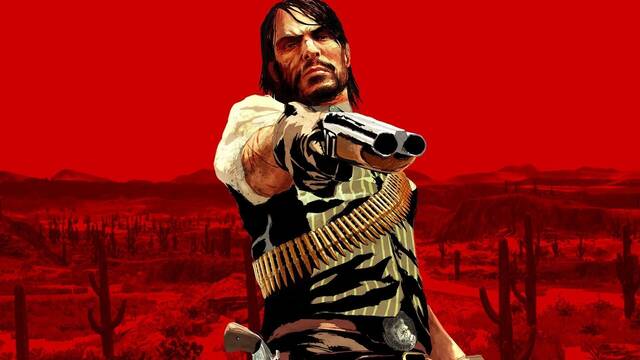
Red Dead Redemption is one of Rockstar Games’ most celebrated sagas and one of the strongest examples of how video games can transform a classic film genre into an interactive epic. While Rockstar is often associated first with Grand Theft Auto, the Red Dead series proved that the studio could also build a slower, more emotional, and more atmospheric kind of open-world experience. Its world is full of outlaws, sheriffs, dying frontiers, loyalty, revenge, survival, and the painful end of the Wild West.
The roots of the saga go back to Red Dead Revolver, released in 2004. This first game was not yet the massive open-world experience that later defined the franchise. It was a more arcade-style third-person action game inspired by spaghetti westerns, revenge stories, duels, bounty hunters, and stylized violence. Its protagonist, Red Harlow, belonged to a more exaggerated and mythic version of the American frontier.
Although Red Dead Revolver was not as ambitious as later Rockstar titles, it created the foundation for the series’ identity: revolvers, dusty towns, dramatic shootouts, corrupt authorities, and a fascination with the visual language of western cinema. Rockstar later took that foundation and expanded it into something much larger, deeper, and more emotionally mature.
Red Dead Redemption, released in 2010, transformed the franchise completely. Developed by Rockstar San Diego, the game introduced players to John Marston, a former outlaw forced by government agents to hunt down members of his old gang. Instead of presenting the Wild West as a simple playground for gunfights, the game explored a period of transition: the old frontier was disappearing, modern institutions were expanding, and men like Marston no longer belonged to the world that was replacing them.
The setting was one of the game’s greatest strengths. Its open world included dusty American plains, Mexican borderlands, small settlements, ranches, deserts, mountains, and dangerous wilderness. Players could ride across the landscape, hunt animals, play poker, help strangers, capture bounties, duel enemies, or simply watch the sun set over the frontier. This combination of freedom, atmosphere, and storytelling made the game feel like a playable western film.
The success of Red Dead Redemption came from the way it balanced action and melancholy. It had shootouts, chases, robberies, and explosive missions, but its emotional center was John Marston’s search for peace. He wanted to leave violence behind, yet violence kept finding him. This gave the story a tragic weight that made it stand apart from many open-world games of its time.
Red Dead Redemption 2, released in 2018, expanded the saga on every level. Although it arrived after the first Redemption, its story is a prequel set in 1899. The game follows Arthur Morgan, a senior member of the Van der Linde gang, as the group tries to survive while the age of outlaws comes to an end.
Rockstar created one of the most detailed open worlds in gaming history. Towns, forests, swamps, snowy mountains, wildlife, weather, camps, conversations, horses, and random encounters all contributed to a world that felt unusually alive. The game was slower and more deliberate than many action titles, but that rhythm helped create immersion. Players were encouraged to live inside the world, not just rush through it.
The Red Dead timeline can be understood in both release order and story order. This is one of the most useful ways to see how the saga evolved:
Red Dead Redemption 2 became a major entertainment event. Its launch was enormous, and its long-term sales proved that the audience for a serious, cinematic western was much larger than some might have expected. The game was praised for its writing, performances, music, visual detail, environmental design, and emotional depth. Arthur Morgan, in particular, became one of the most respected protagonists in modern gaming.
The saga’s success is not based only on numbers. It also changed how players and critics talk about open-world games. Red Dead showed that a vast map does not need to be only a checklist of activities. It can also be a mood, a historical portrait, a character study, and a meditation on change.
The legacy of Red Dead Redemption is enormous. The saga brought the western back into mainstream gaming and proved that the genre could feel modern, emotional, and commercially powerful. It combined Rockstar’s talent for open-world design with a more reflective tone than many of its other games.
At its heart, Red Dead Redemption is about people who cannot escape the consequences of their past. John Marston and Arthur Morgan are both criminals, but they are also tragic figures searching for meaning in a world that is leaving them behind. That mixture of freedom, violence, beauty, and sadness is what makes Red Dead Redemption one of the great sagas in video game history.
