Looking for cheat codes? Go straight to the complete PC cheat list, PS2 button combinations or Vice City Stories PSP codes. The first two cover Tommy Vercetti's 1986 adventure; Vice City Stories is a separate prequel set in 1984.
| Game and platform | Use this guide for | What it contains |
|---|---|---|
| GTA Vice City PC cheats | The original Windows release and Grand Theft Auto: Vice City - The Definitive Edition on PC | All 62 unique PC codes, with separate compatibility information for the Classic and Definitive editions |
| GTA Vice City PS2 cheats | The original PlayStation 2 version of Grand Theft Auto: Vice City | All 54 working button combinations, input instructions and an explanation of the fake codes commonly repeated online |
| GTA Vice City Stories PSP cheats | Grand Theft Auto: Vice City Stories on PSP | All 36 PSP button combinations, including weapons, money, vehicles, weather and multiplayer unlocks |
PC and PS2 cheats are not entered in the same way. PC codes are typed during gameplay, whereas PS2 and PSP cheats use controller button combinations. Some effects also differ between releases, so use the page created specifically for your version.
Grand Theft Auto: Vice City is an open-world action-adventure game developed by Rockstar North and published by Rockstar Games. It was originally released for PlayStation 2 in 2002 and takes place in Vice City in 1986.
Vice City is a fictional location inspired heavily by Miami and South Florida, but the game does not literally take place in Miami. Its beaches, palm-lined avenues, luxury hotels, nightclubs, mansions and poorer industrial districts reinterpret the atmosphere of 1980s South Florida through Rockstar's exaggerated criminal satire.
The map is divided primarily between two large islands. The eastern side contains areas such as Ocean Beach, Washington Beach and Vice Point, while the western side includes Downtown, Little Havana and Little Haiti. Smaller islands, the airport, the docks, the golf course and several offshore properties complete a city that was significantly more colorful and varied than the Liberty City seen in Grand Theft Auto III.
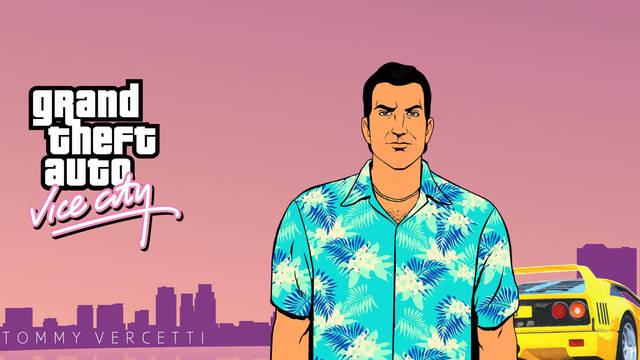
The story follows Tommy Vercetti, a Liberty City mobster released after serving 15 years in prison. Sonny Forelli, head of the Forelli crime family, sends him south to establish the family's foothold in Vice City's growing drug trade.
Shortly after arriving, Tommy takes part in a drug deal arranged through lawyer Ken Rosenberg. The exchange is ambushed, leaving Tommy without either the drugs or Sonny's money. Ordered to recover what was lost, he begins investigating the setup while working for some of the city's most powerful and dangerous figures.
What begins as an attempt to recover Sonny's money gradually becomes Tommy's own rise through Vice City's criminal underworld. He forms alliances, eliminates rivals, acquires businesses and turns those properties into money-making assets. This gives the story a stronger sense of personal progression than Grand Theft Auto III: Tommy is not merely completing jobs but building an empire of his own.
The plot and visual direction draw openly from 1980s crime movies and television, particularly Scarface and Miami Vice, while retaining the exaggerated humor and social satire associated with the GTA series.
Tommy was voiced by Ray Liotta. The wider cast also includes Philip Michael Thomas as Lance Vance, Burt Reynolds as Avery Carrington and Dennis Hopper as movie director Steve Scott, helping give the game one of the most recognizable voice casts of its era.
Vice City builds on the open-world structure introduced by Grand Theft Auto III. Players can follow the main story, accept work from several contacts, explore the city freely or complete many optional activities in whichever order they prefer.
Its headline additions include motorcycles, flyable helicopters, a seaplane, outfits and purchasable properties, alongside a wider selection of cars, boats and weapons. Motorcycles made it easier to weave through traffic, although they also left Tommy more vulnerable in crashes and gunfights.
The asset system becomes central later in the game. Tommy can purchase properties such as a nightclub, taxi company, print works and film studio. Completing the missions associated with an asset causes it to generate income, and developing enough businesses is required to advance toward the final part of the story.
Optional content includes street races, stadium events, hidden packages, unique stunt jumps, rampages and vehicle-based jobs such as Vigilante, Paramedic, Firefighter, Taxi Driver and Pizza Boy. Unlike protagonists in later GTA games, however, Tommy cannot swim; falling into deep water is fatal.
The soundtrack is one of the defining features of Grand Theft Auto: Vice City. The original game features seven music stations and two talk stations, each presented with its own hosts, commercials, news reports and fictional programming.
The music ranges from pop, new wave and power ballads to heavy metal, hip-hop, electro, soul, disco and Latin jazz. The original 2002 soundtrack featured artists such as Hall & Oates, A Flock of Seagulls, Blondie, Iron Maiden, Judas Priest, Megadeth, Tito Puente, Grandmaster Flash and the Furious Five, and Michael Jackson.
Michael Jackson's "Billie Jean" appeared on Flash FM in the original release; the song "Thriller" did not. Some later releases omitted licensed tracks including "Billie Jean" because of music-licensing issues.
Radio Espantoso is the game's only station dedicated to Latin and Caribbean music. Hosted by Pepe, it combines Latin jazz, mambo and other Caribbean sounds with tracks by artists including Tito Puente, Mongo Santamaria, Deodato and Irakere.
| Station | Format |
|---|---|
| Wildstyle Pirate Radio | Hip-hop and electro |
| Flash FM | Pop and rock |
| Fever 105 | Soul, disco and R&B |
| V-Rock | Hard rock and heavy metal |
| Emotion 98.3 | Power ballads and soft rock |
| Wave 103 | New wave and synth-pop |
| Radio Espantoso | Latin jazz, mambo and Caribbean music |
| K-Chat | Talk radio and interviews |
| VCPR | Public talk radio and satire |
Grand Theft Auto: Vice City first launched for PlayStation 2 in North America in October 2002 and in Europe in November 2002. It was not released simultaneously on PC and Xbox.
| Version | Release period | Main characteristics |
|---|---|---|
| PlayStation 2 | 2002 | The original release and the version for which the game was initially designed |
| Windows PC | May 2003 | Higher display resolutions, mouse and keyboard support, custom music and an extensive modding community |
| Xbox | Late 2003 in North America and early 2004 in Europe | Released with Grand Theft Auto III as Grand Theft Auto: Double Pack, with several graphical and audio improvements |
| iOS and Android | 2012 | Tenth-anniversary mobile versions with touch controls and updated visuals |
| PlayStation 4 | 2015 | An emulated PS2 release with higher-resolution output and Trophy support |
| Definitive Edition | 2021 | A remastered version using Unreal Engine, with redesigned lighting, revised models, modernized controls and several content differences |
Music licensing, cheat compatibility, controls and some visual details vary between these editions. In particular, the Classic PC and Definitive Edition releases do not have exactly the same cheat-code set, which is why our PC cheat guide identifies the compatible version for every code.
Grand Theft Auto: Vice City Stories is not a port, expansion or alternate edition of Vice City. It is a separate game developed by Rockstar Leeds and Rockstar North, originally released for PSP in 2006 and ported to PlayStation 2 in 2007.
Its story takes place in 1984, two years before Tommy Vercetti arrives, and follows Victor "Vic" Vance, the brother of Lance Vance. Although it uses a recognizable version of the same city, its missions, progression systems, vehicles, soundtrack and cheat codes are different.
The PSP version also includes a local multiplayer mode with unlockable content. Its complete set of 36 button combinations can be found in our GTA Vice City Stories PSP cheats guide.
Grand Theft Auto: Vice City became one of the most successful and influential games of the PlayStation 2 era. Its commercial performance exceeded that of Grand Theft Auto III, and it remained one of the console's best-selling titles before Grand Theft Auto: San Andreas eventually surpassed it.
Its importance goes beyond sales. Vice City's strong visual identity, licensed soundtrack, voiced protagonist and property-based progression showed how an open-world game could use a specific historical setting as more than scenery. Music, architecture, clothing, vehicles, dialogue and fictional advertising all work together to create a stylized version of 1986.
That combination of freedom, atmosphere and character-driven storytelling helped establish the formula Rockstar would expand in later GTA games. Decades after its original release, Tommy Vercetti's rise to power and Vice City's pastel-colored streets remain among the most recognizable images in the series.
For the preceding and following mainline 3D entries, visit our Grand Theft Auto III guide and Grand Theft Auto: San Andreas guide.
No. Many effects are similar, but PC uses typed words and phrases while PS2 uses controller button combinations. The number of available cheats and certain effects also vary between versions.
No. Most Classic codes remain available, but several were removed and the Definitive Edition introduced a small number of new codes. Consult the compatibility column in our complete PC cheat list.
No. Vice City Stories is a separate prequel starring Vic Vance and set in 1984. The main Vice City story stars Tommy Vercetti and takes place in 1986.
Create a separate clean save before activating cheats and avoid overwriting it afterward. Certain pedestrian, traffic and gameplay effects can interfere with missions, statistics or normal progress, and not every effect can be safely reversed.